DTNI15 Conference Explores Next Steps for Building a Fairer Economy
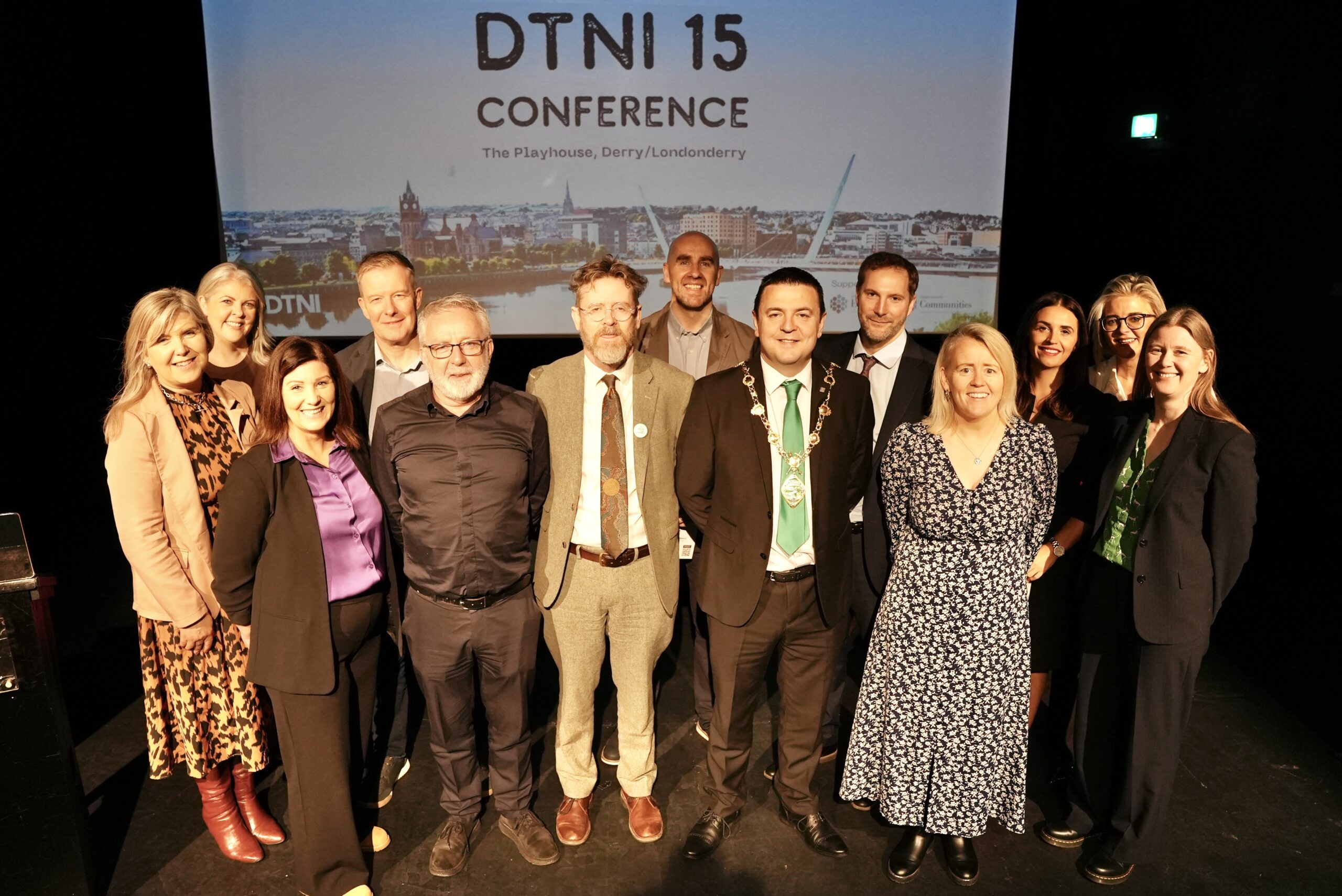
On 15 October 2025, community organisations, government bodies, businesses and public agencies came together at The Playhouse, Derry, for the Development Trusts NI (DTNI) 15th Community Wealth Building (CWB) Conference — a landmark event exploring how to build a fairer, more democratic economy across the island of Ireland.
Attendees examined how community wealth building can create good jobs, attract investment, make better use of public assets and strengthen a plural economy that keeps wealth circulating locally.
DTNI describes CWB as “an approach to economic development which seeks to capture the power of public anchor organisations to better address poverty, marginalisation and economic injustice.”
Workshops and discussions centred on the growing potential of “social clusters” — groups of community organisations and local enterprises collaborating to increase investment, strengthen local business, and drive regeneration.
Conference organiser Elisha McCallion of Development Trusts NI said:
“The energy at this conference was fantastic. There’s clearly a genuine appetite to move beyond old models of economic development and implement a new way of thinking that places wealth, control and opportunity in the hands of communities.
The model and the plans are there; we must now come together as a society to turn what we have learned into real steps that make a difference and shape an economy that works for everyone.
Community wealth building isn’t just an idea — it’s a practical, achievable approach that can transform local economies and make them more democratic, sustainable and fair.
There’s huge potential here. The conversations and connections from this event will help shape real projects that make a lasting difference across our society.”
International Insights
Keynote speaker Neil McInroy, Global Lead for CWB at The Democracy Collaborative and Senior Adviser to the Scottish Government, shared international insights from his advisory work:
“Some progressive action already happens across the five pillars of Community Wealth Building in Northern Ireland.
Imagine a Northern Ireland where public procurement is harnessed to support local enterprises; where land and property are stewarded for community benefit; where finances flow to social goals; and where ownership is shared and inclusive.”
His reference to the five pillars of community wealth building — workforce, finance, progressive procurement, land and property, and plural ownership — was further explored through practical examples. These provided a useful framework for attendees considering how to localise the model in their own areas.
Neil highlighted how Scotland offers one of the most advanced examples of CWB in policy and practice in the UK. The Community Wealth Building (Scotland) Bill, introduced to the Scottish Parliament in 2025, will require public bodies and local authorities to adopt CWB partnerships and publish action plans.
The Scottish Government identifies five interlinked pillars of CWB and supports local pilot areas such as North Ayrshire, where McInroy has served on an expert advisory panel. Scotland’s model demonstrates how CWB can evolve from a voluntary movement into a statutory framework — ensuring wealth retention, fair work and inclusive ownership are embedded into public policy.
Developments in Northern Ireland and the Republic
In Northern Ireland, the Department for Communities has been developing a policy framework for CWB, including an advisory panel (2022) and early pilot partnerships in Larne and the North West. These pilots are testing how to use public assets, procurement and finance to strengthen local economies — moving from theory to measurable local impact.
In the Republic of Ireland, Dublin City Council (DCC) has already moved from concept to practice. After adopting the CWB model in 2021, DCC established a cross-departmental working group and launched an Implementation Plan in 2022.
In practice, DCC has applied CWB thinking to targeted recruitment initiatives in disadvantaged areas such as Ballymun and Cherry Orchard — opening up pathways into city employment and promoting more inclusive local economies.
Lessons from the United States
Further afield, St Louis, Missouri offers an instructive example of CWB in marginalised and disadvantaged communities. Initiatives such as WEPOWER’s Build Community Wealth and Invest STL’s Rooted programme focus on building Black and Latinx wealth through community-owned assets, entrepreneurship and place-based investment.
Neil McInroy’s advisory work with The Democracy Collaborative has helped shape these efforts, linking local practice in the US to broader international learning.
Together, these examples show how CWB is being translated into legal frameworks, institutional practice and place-based investment — across very different policy environments.
An All-Island Contribution
The conference also featured a vital all-island perspective. Suzie Cahn, Shared Island Programmes Director at The Wheel, contributed as a keynote listener and panellist, underscoring the value of cross-border collaboration and shared learning.
Suzie’s participation reflected the growing recognition that a fairer economy requires an all-island support system — one that aligns public policy, community practice and shared investment frameworks across jurisdictions.
Key Takeaways
- CWB works. It’s not a theory but rather a growing evidence-based approach embedded in public policy, procurement and community ownership.
- The five pillars matter. Workforce, finance, procurement, land and property, and plural ownership together provide a clear structure for implementation.
- Local assets, local control. Public anchor institutions can recycle wealth locally through targeted procurement, land stewardship and fair employment.
- Scale and system change required. While many successful pilots exist, the next challenge is to scale up — embedding CWB into the economic mainstream.
- All-island collaboration is essential. Coordinated policy, shared learning and joint investment frameworks could help realise the model’s full potential for communities north and south.
The Road Ahead
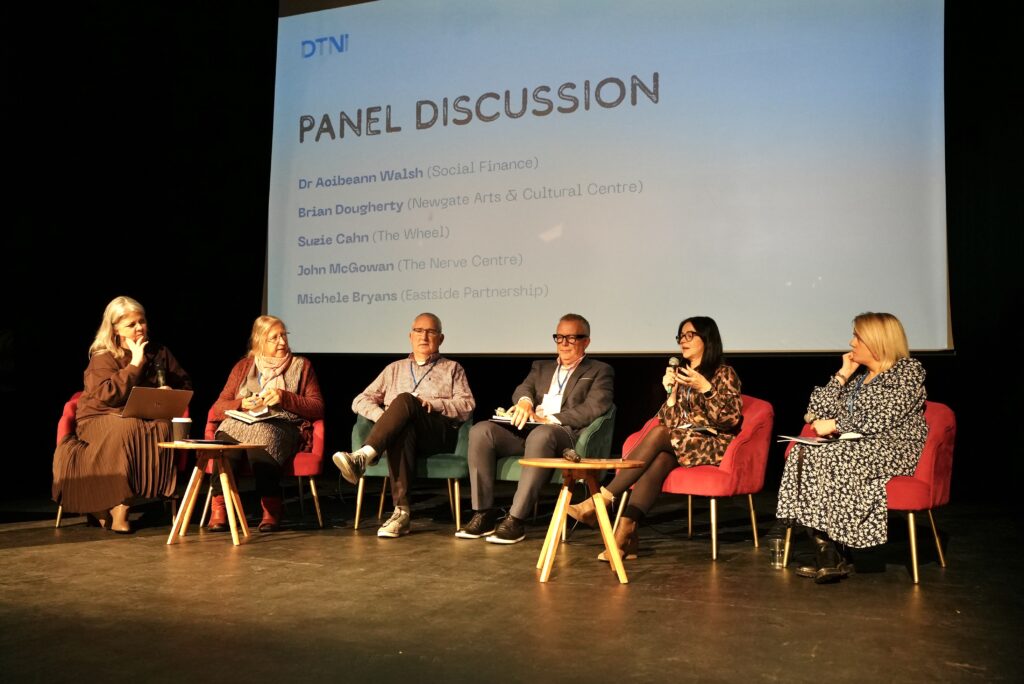
The DTNI15 Conference broadened and deepened the conversation on CWB, with panellists sharing how local councils, anchor institutions and social enterprises can collaborate to scale the model across the island.
It underscored the fact that community wealth building is already making a tangible difference to inequality through local economies. Across the island, communities are proving that inclusive, locally grounded economies are not only possible but achievable.
The next step is clear — to turn this shared vision into sustained, system-wide change, supported by an all-island network of practice, policy and partnership.
As Elisha McCallion concluded:
“The model and the plans are there. We must now come together as a society to turn what we have learned into real steps that make a difference — and shape an economy that works for everyone.”